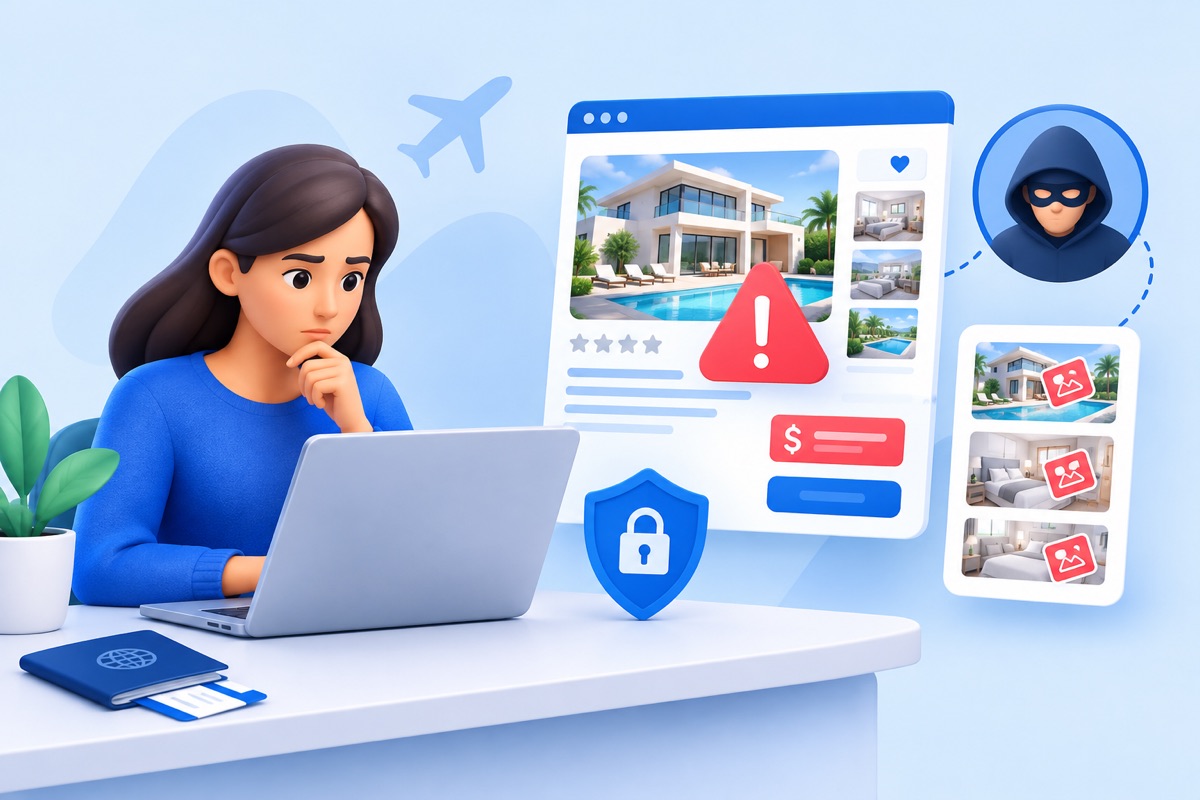
Fake Airbnb listings use stolen photos and false details to take your money. Learn the 7 warning signs of a fake listing and what to do if you spot one.
What if the perfect Airbnb you just booked isn't real at all? Scammers create fake listings using
stolen photos and false details to trick travelers into paying for a place that doesn't exist.
Consumers reported nearly 65,000 rental scams between 2020 and mid-2025, with total losses reaching about $65 million. Many of these scams start with fake listings that
look real but are posted with the scammer's own contact details.
Fake Airbnb listings often look normal at first. But once you look closer, small clues can show that
something is wrong. These clues can include copied photos, prices that seem too low, hosts who ask
you to pay outside the app, or listings with no reviews at all.
Knowing these signs can help you avoid losing money before you book. Below are seven warning signs
that can help you spot a fake Airbnb listing.
Key Takeaways
- A price that's noticeably lower than similar listings nearby is usually the first sign something's wrong.
- No reviews, or reviews that all sound the same, are worth a second look before you book.
- Run listing photos through a reverse image search if anything about them feels off.
- Never pay a host outside Airbnb, no matter how good the reason sounds.
- A vague location or a description that avoids specifics is a red flag on its own.
- Pressure to book fast or skip normal steps is usually a tactic, not a coincidence.
- New host accounts with no verification or response history deserve extra caution.
- If you spot a fake listing, report it to Airbnb and save your messages and screenshots.
- A little bit of checking before you book goes a long way toward avoiding an Airbnb scam.
Why Airbnb Scams Are on the Rise
Airbnb scams don't happen by accident. A few clear reasons explain why fake listings keep showing up
on the platform. Here's a quick look at what's driving this trend.
| Factor | Explanation |
|---|
| More people booking online | As more travelers turn to rental sites, scammers get more opportunities to post fake listings. |
| Large number of daily bookings | Platforms handle thousands of transactions every day, which makes them a target for fraud. |
| Weak listing checks | Not every listing goes through a full review before it's posted, so fake ones can slip through. |
| Slow fraud detection | With so many bookings happening at once, it takes time to catch and remove fake listings. |
| Copied content | Scammers often steal real photos and reviews from other listings to make their fake ones look genuine. |
| Payment requests outside the app | Some hosts try to move the conversation off the platform, where there's no protection if something goes wrong. |
7 Warning Signs of a Fake Listing
Fake Airbnb listings usually share a few common patterns. Knowing what to look for before you book
can help you avoid losing money or booking a place that doesn't actually exist.
Sign #1: Prices That Are Too Good to Be True
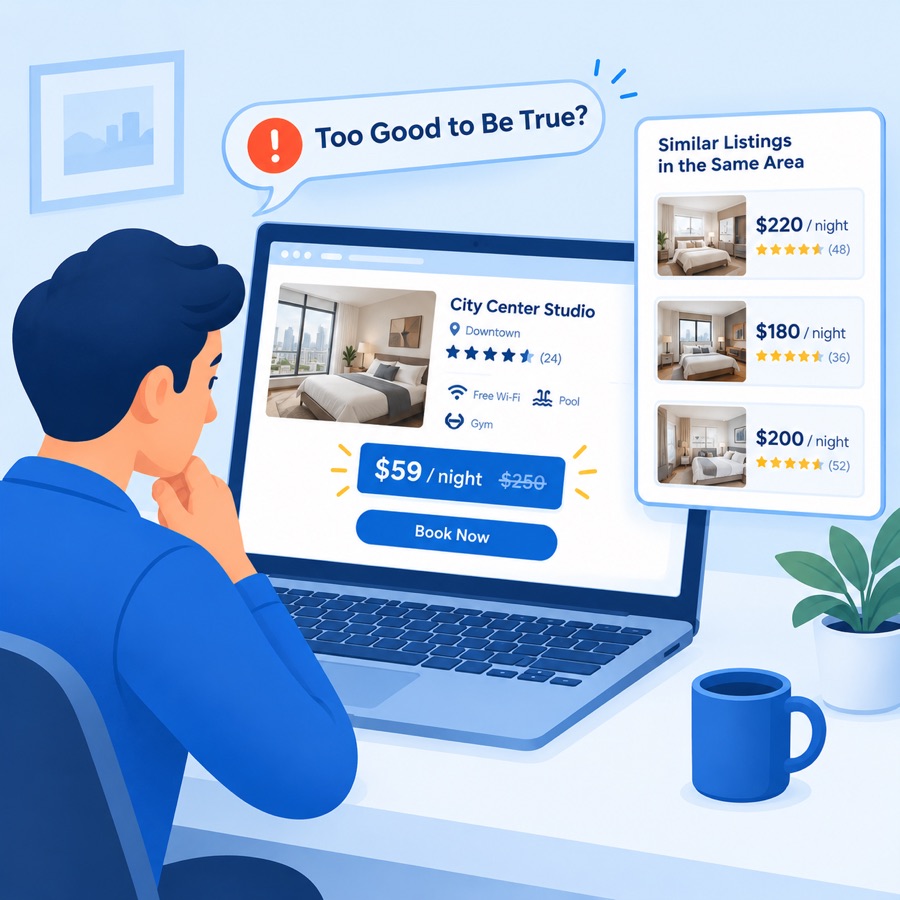
A listing priced far below similar properties in the same area is one of the clearest signs of a
scam. Scammers often set prices low to get quick bookings before anyone checks the details closely. A
price that feels off compared to nearby listings is usually the first thing worth noticing.
Examples
A studio in a city center listed for a fraction of the normal rate, or a large villa priced close to a
budget hotel room, are common examples. Listings that offer high-end amenities at unusually low prices
should also be checked carefully before booking.
How to Check Fair Market Rates
Compare the listing with at least three or four similar properties in the same location. Look at the
size, number of rooms, and amenities offered. If one listing is priced much lower than the rest
without a clear reason, treat it as a warning sign. It also helps to check if the same photos or
description appear on other rental sites at a different price. If they do, the listing is likely fake.
Sign #2: No Reviews or Only Fake-Looking Reviews
Why Reviews Matter
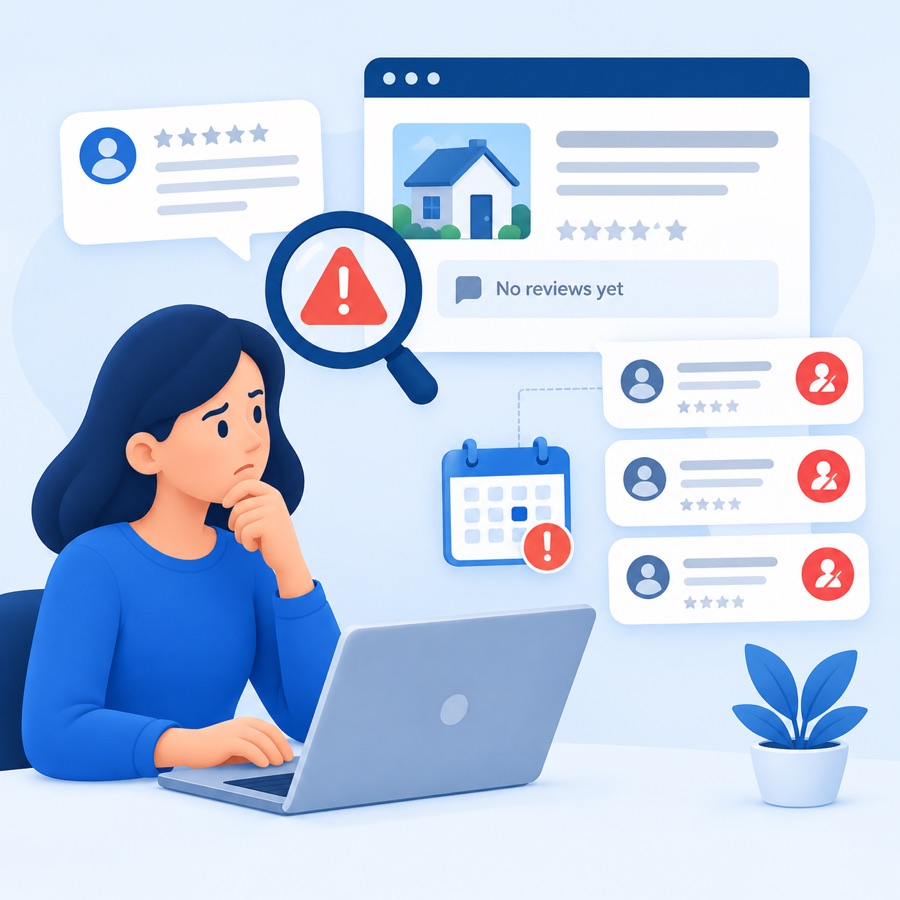
Past guest reviews are usually the easiest way to check if a place is real. So when a listing has no
reviews but claims to have been active for a while, that's worth a second look. Real places build up
a few reviews naturally over time, simply because guests actually stayed there.
How to Spot Fake or Copied Reviews
A few things give away fake reviews. They tend to be short and vague, without saying much about the
room, the host, or the neighborhood. Several reviews posted on the same day is another giveaway. So is repeated wording across different reviewers, or profiles with no photo and
no history of reviewing anything else. None of these alone proves a scam, but a pattern of them is hard
to ignore.
Sign #3: Stolen or Reused Photos
How to Run a Reverse Image Search
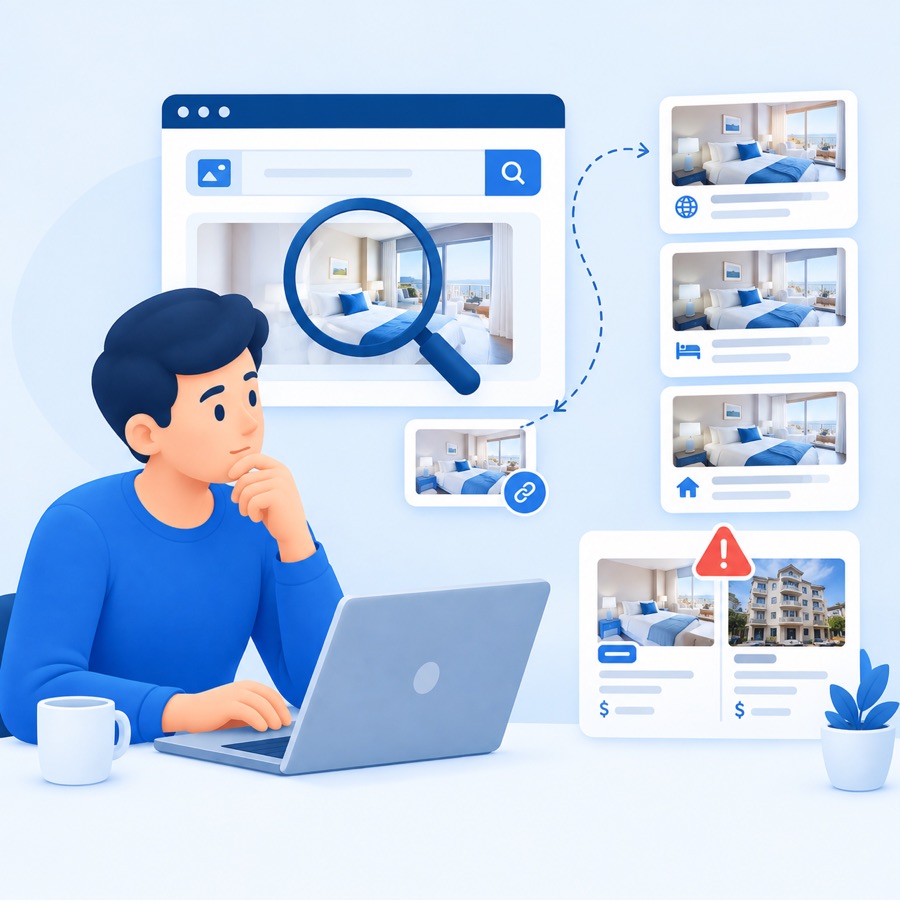
Take a photo from the listing and drop it into Google Images. It'll show you if that same photo is
floating around elsewhere, maybe on a hotel website, or a different rental listing under a completely
different name. That's usually enough to confirm something's off.
Signs Photos Don't Match the Listing
Sometimes the photos just don't add up. A listing might show a polished, high-end interior at a price
that doesn't fit. Or the pictures don't match what's written in the description. Missing exterior
shots are another common gap, since a real host usually has no reason to hide what the building looks
like from outside.
Sign #4: Host Pushes You to Pay Outside Airbnb
Why Off-Platform Payment Requests Are Dangerous
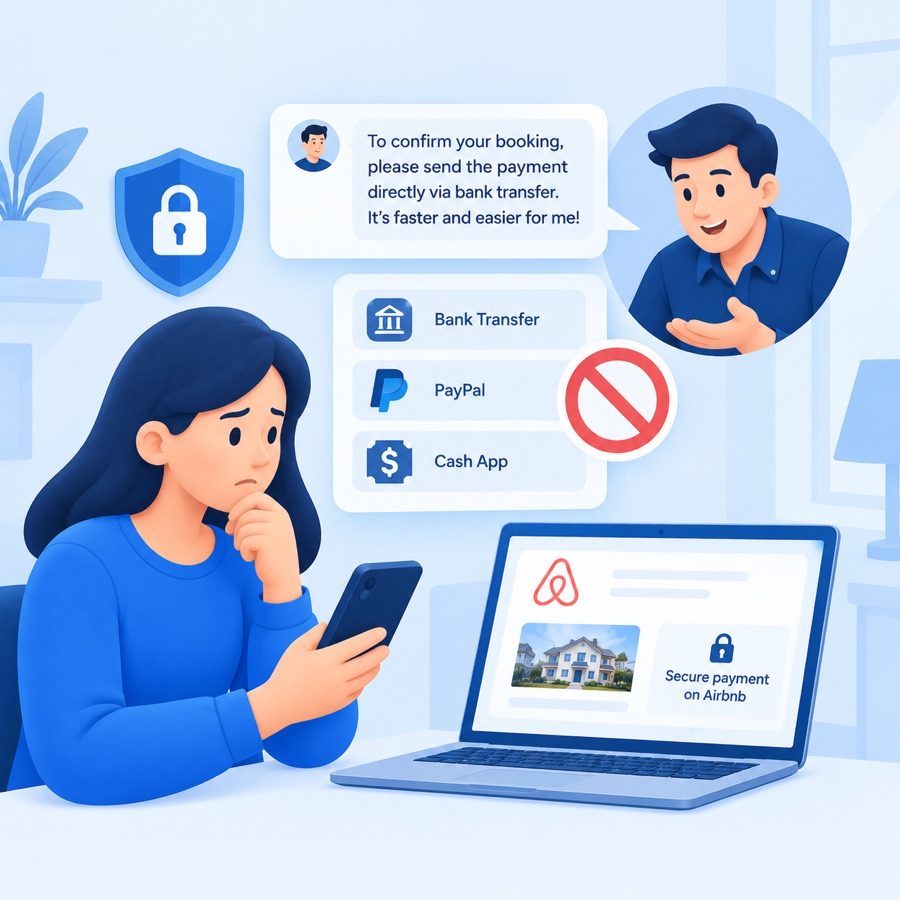
Once money leaves Airbnb's system, so does its protection. Pay a host directly through a bank transfer
or an app, and there's no real path to get that money back if the place turns out to be fake.
What Airbnb's Policy Says
Airbnb requires that all payments go through its own platform. So a host asking to be paid another way
isn't just bending the rules, they're breaking them. That alone is reason enough to walk away.
Sign #5: Vague or Incomplete Listing Details
Missing Address
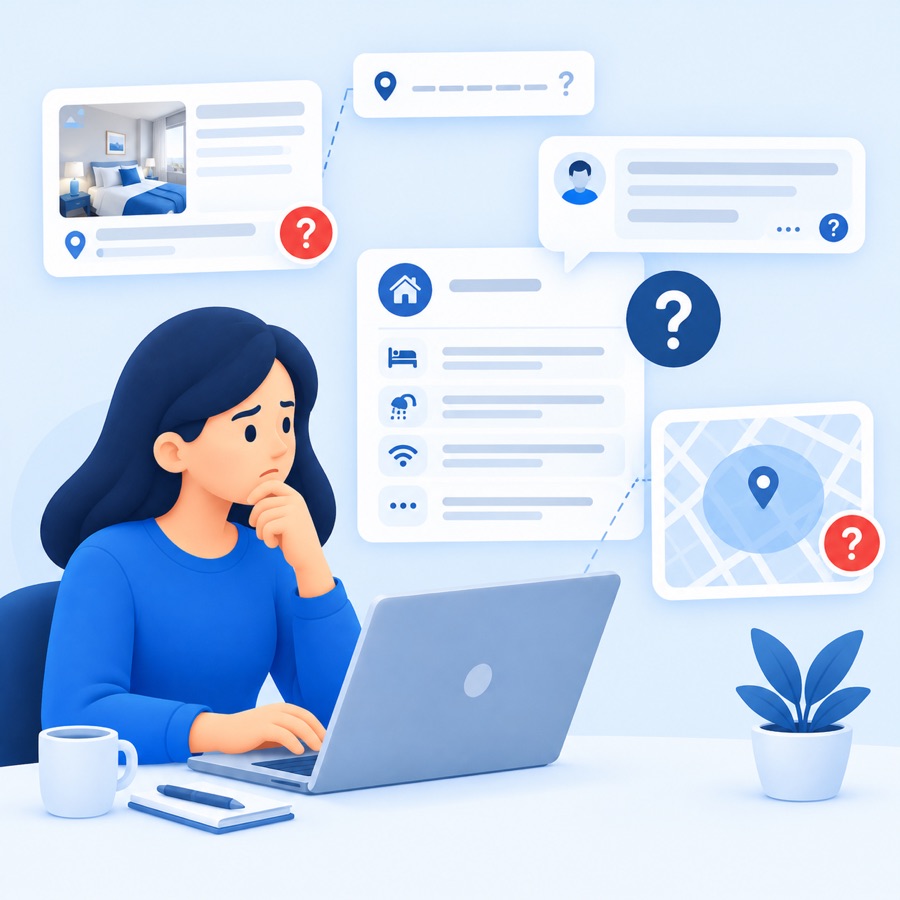
Most real listings give a general area upfront and share the exact address after booking. If a host
keeps dodging questions about where the place actually is, that's not a good sign.
Unclear Descriptions
Watch for descriptions that stay generic, with no mention of the neighborhood, the layout, or what's
actually included. A real host usually has plenty to say about their own property.
No Exact Location Shown
Check the map pin too. If it just hovers over a wide area instead of pointing to one spot, the listing
may not be connected to a real address at all.
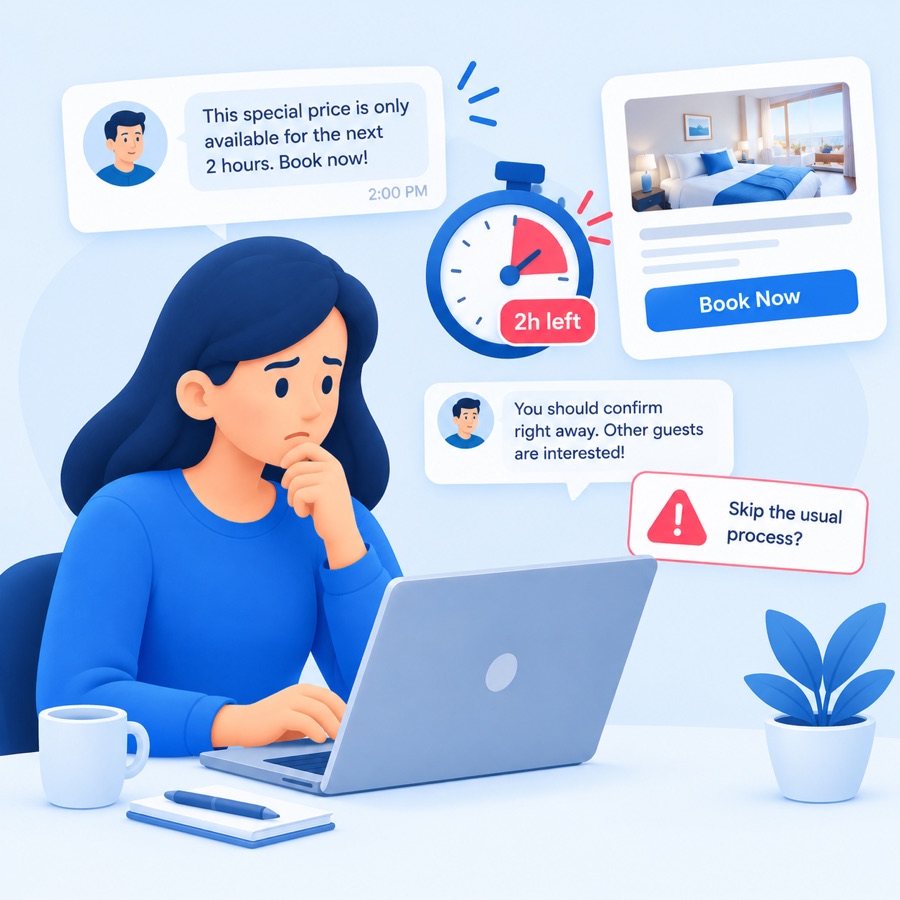
Sign #6: Urgency and Pressure Tactics
Limited-Time Offers
"This discount ends in two hours" is a classic move. It's designed to get you booking before you've
had time to check anything properly.
Rush to Book
If a host keeps nudging you to confirm right away and brushes off your questions, that's worth slowing
down for, not speeding past.
Pressure to Skip Normal Steps
Anytime someone asks you to skip Airbnb's usual process, whether that's paying outside the app or
moving the conversation elsewhere, they're asking you to skip the exact steps that keep you protected.
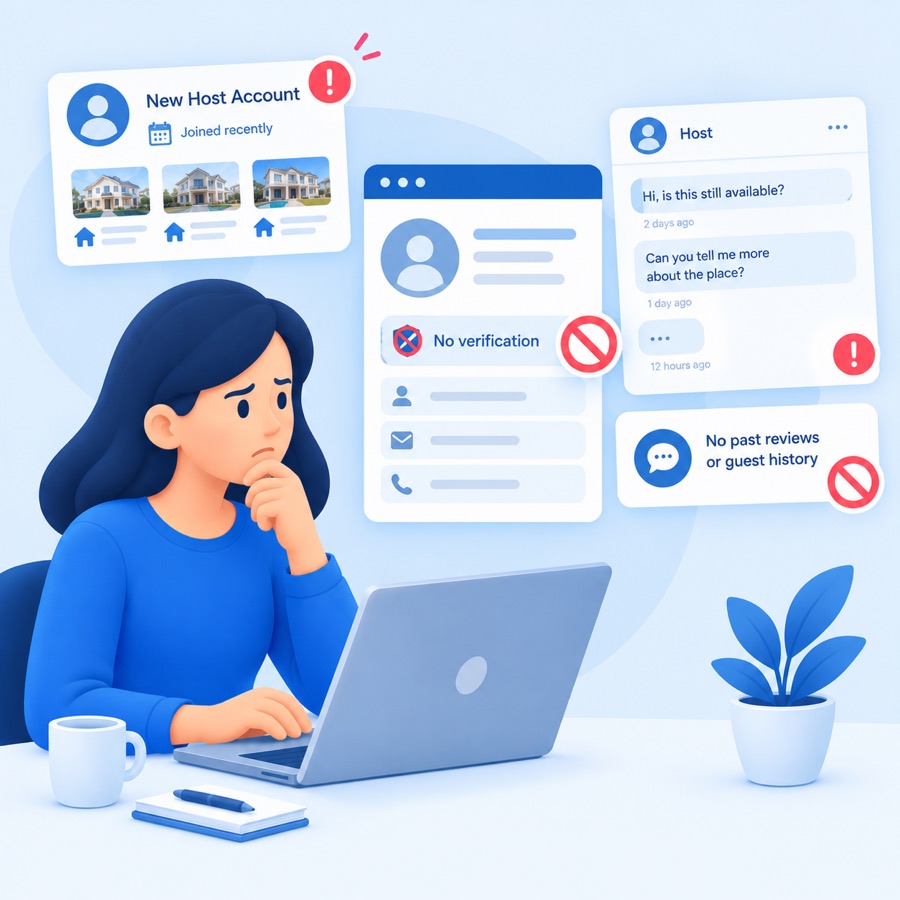
Sign #7: Host Has Little to No Activity History
New Accounts
A brand-new host account with several listings already up is a pattern worth noticing. Real hosting
businesses don't usually appear overnight with a full portfolio.
No Verification Badges
Airbnb gives hosts the option to verify their identity. A profile without that badge, without a photo,
or missing basic details deserves a closer look before you book.
No Response History
No message history, no record of past guest interactions, or answers that feel slow and vague: these
are all signs the account might not be behind a real, functioning property.
What to Do If You Spot a Fake Listing
If you notice any of these Airbnb scam warning signs, don't book or send payment. Report the listing
right away and keep records of your conversation. Acting quickly can protect your money and help stop
the same listing from tricking other travelers.
- Do not send any payment. If something feels off, stop before you pay. Once money is
sent outside Airbnb, it's very hard to get back. This applies to other sites too: if you're ever
unsure whether a store or booking site is real, it's worth checking before you pay.
- Report the listing to Airbnb. Use Airbnb's "Report this listing" option, usually
found on the listing page. Explain exactly what looked wrong, such as stolen photos or a host asking
for payment outside the app. This helps Airbnb take it down faster.
- Take screenshots of everything. Save screenshots of the listing, the host's profile,
and any messages you exchanged. This proof is useful if you need to report the scam or dispute a
charge later.
- Contact Airbnb support directly. If you've already made a payment or shared personal
details, contact Airbnb support right away. Explain the situation clearly so they can look into it and
guide you on next steps.
- Report it to consumer protection sites. Beyond Airbnb, you can also report the scam to
consumer protection resources. These sites track scam reports across different platforms, not just
Airbnb scams, and can help warn other users. This is especially useful if you've come across other
questionable sites too. Whether you're checking if Rue La La is fake, if Sierra.com is legit, or if
Soccer.com is legit, a quick search on a trusted consumer protection site can save you from a bad
purchase.
- Alert your bank or payment provider. If you paid outside Airbnb and suspect fraud,
contact your bank or card provider immediately. Some payments can be reversed or disputed if reported
quickly enough.
- Report on Unscammed. Unscammed makes reporting easier. We help you file reports with
the FBI and FTC and offer a 24/7 support line at 1-866-UNSCAMY for
a real-time check before you make a costly mistake.
Steps to Report It
Once you're sure a listing looks like a scam, report it right away. Quick action helps protect your
money and stops the listing from reaching other travelers.
| Step | What to Do |
|---|
| Stop all communication | Don't send any more messages or personal details to the host once something feels wrong. |
| Save proof | Take screenshots of the listing, host profile, and any messages before they can be deleted. |
| Report to Airbnb | Use the "Report this listing" option on the listing page and explain what looked suspicious. |
| Contact Airbnb support | If you already paid or shared details, reach out to Airbnb support directly for help. |
| Contact your bank | If you paid outside Airbnb, call your bank or card provider to ask about reversing the charge. |
| File a report with the FTC | Report the scam at ReportFraud.ftc.gov to help
authorities track scam patterns. |
How to Book Safely on Airbnb
Spotting a fake listing is only half the job. The other half is building a few simple habits into how
you book, so you're less likely to run into an Airbnb scam in the first place. None of these steps take
much time, but together they make a real difference.
- Check the host's profile before anything else. Look for a verified badge, a real
profile photo, and some history of past stays or reviews. A host with none of this isn't
automatically a scammer, but it's worth being more careful. Compare prices across a few similar
listings in the same area. If one stands out as much cheaper, figure out why before you book it.
- Stick to Airbnb's payment system, always. No exceptions, no matter how convincing the
reason sounds. This one rule alone blocks most of the common ways people lose money to fake listings.
Read a handful of recent reviews, not just the top one or two. Look for details that sound specific
to the actual stay, not generic praise that could apply to any property.
- Ask the host a direct question before booking. Something simple, like asking about
parking or check-in. A real host usually replies with a clear, specific answer. A vague or delayed
reply is worth noticing. Use the map on the listing to check the general location matches what's
described. If the pin looks off or too broad, treat that as one more thing to double-check.
- Trust the platform's built-in protections. They exist for a reason. Booking and
paying outside Airbnb might feel faster, but it removes every safeguard that would otherwise help you
if something goes wrong.
Making Your Next Booking a Safe One
Airbnb isn't the only place where fake listings and scam sites show up. From sketchy online stores to
fake rental ads, it's often hard to know which sites are safe to trust with your money.
If you have already fallen for an Airbnb scam, Unscammed can
help you report it to the right authorities. We help you report scams to the FBI, FTC, your local
police, and your bank if you lost money. The process takes under 10 minutes and is free, so you can take
action without having to figure out where to start.
Frequently Asked Questions
How can I tell if an Airbnb listing is fake?
A few things usually give it away: a price that's way lower than similar places nearby, zero reviews, or a host who wants you to pay outside the app. One of these alone isn't proof of an Airbnb scam, but if you're seeing two or three together, it's worth walking away.
I already paid for a listing that turned out to be fake. What now?
Get in touch with Airbnb support as soon as you can and walk them through what happened. If the payment went outside Airbnb, call your bank too. There's still a chance they can reverse it if you act fast.
Can a verified host still be running a scam?
It happens, though not often. Verification helps, but it's not a guarantee. It's still worth reading a few reviews and checking the photos before you commit to booking.
Just how common are Airbnb scams, really?
They're not the biggest fraud risk out there, but they happen often enough that it pays to stay alert, especially with listings that seem unusually cheap or new.
Should I just message the host on WhatsApp or text instead of the app?
Better not to. Keeping the conversation inside Airbnb means there's a record of everything, and you're still covered by Airbnb's protections if something goes wrong.
What's actually the safest way to pay a host?
Through Airbnb's own payment system, every time. If a host asks for cash, a bank transfer, or some other app, that's your sign to stop and reconsider the booking.

 Share: