
What Evidence to Save After an AI Scam or Phishing Attack
Banks, police and agencies all ask for proof. Learn what to save from phishing emails, fake websites, calls and AI scams, and how to store it before you report.
Published: Oct 9, 2026Fake UPS texts about wrong addresses and small fees lead to pages that steal your card details. Learn how the scam works, 7 ways to spot it, and where to report it.
 Share:


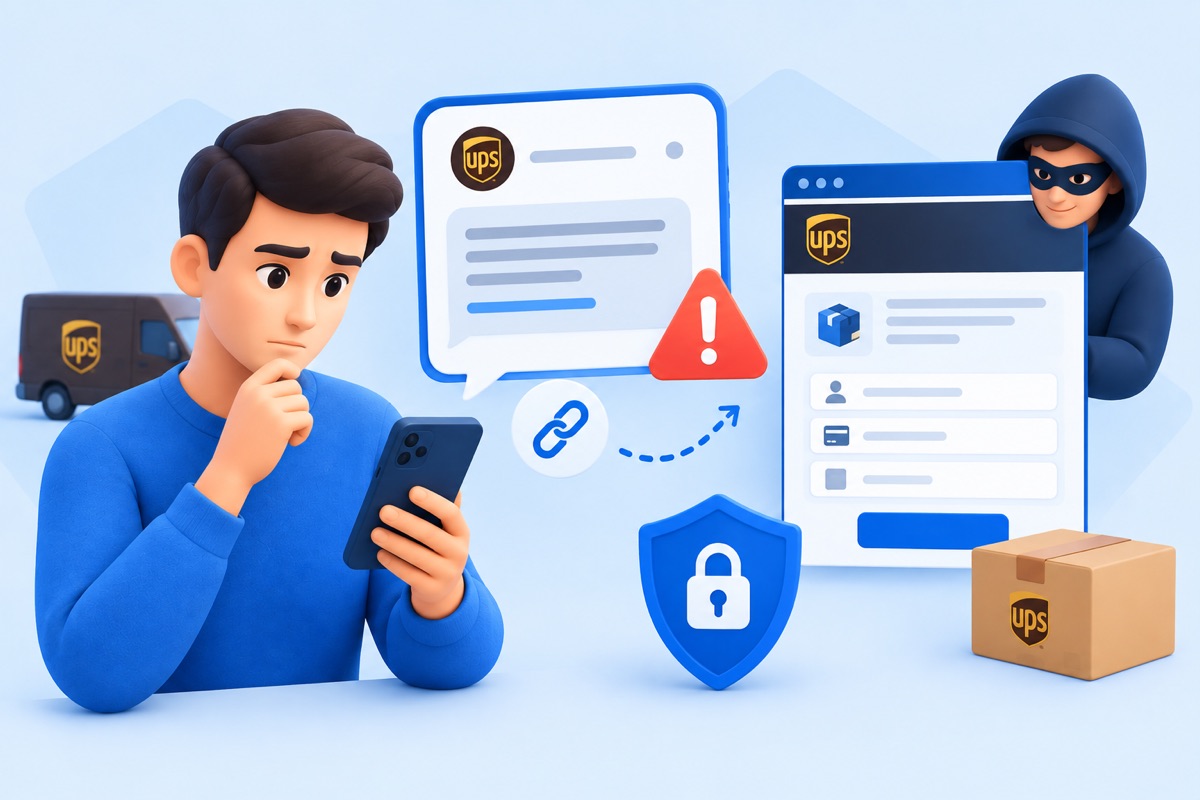
Scammers are sending texts and emails that look like they're from UPS, and thousands of people fall for them every week without realizing it until it's too late. These messages are designed to look like normal delivery updates, making them harder to identify as scams.
This is a widespread problem. According to the Federal Trade Commission, fake package delivery texts were the most reported text scam in the U.S. in 2024, with total text scam losses reaching $470 million that year.
This article explains how these UPS scam texts work, the exact signs that show a message is fake, and the right way to report one once you spot it.
A UPS scam text is a fake message made to look like it's from UPS. It usually claims there's a package issue, like a wrong address or a small fee owed, and includes a link to "fix" it. That link leads to a fake page built to collect your personal or card details. UPS does not request payment or personal information through a text link, so any message asking for either should be treated as suspicious.
Online shopping has grown fast, and package delivery scams have grown with it. According to the FTC, online shopping issues were the second most commonly reported fraud category in 2024, followed by business and job opportunity scams, where losses totaled $750.6 million. This gives scammers a large pool of people expecting a delivery.
Most fake UPS texts follow the same basic pattern. Once you understand the steps, it becomes much easier to recognize one, even if the wording changes from message to message.
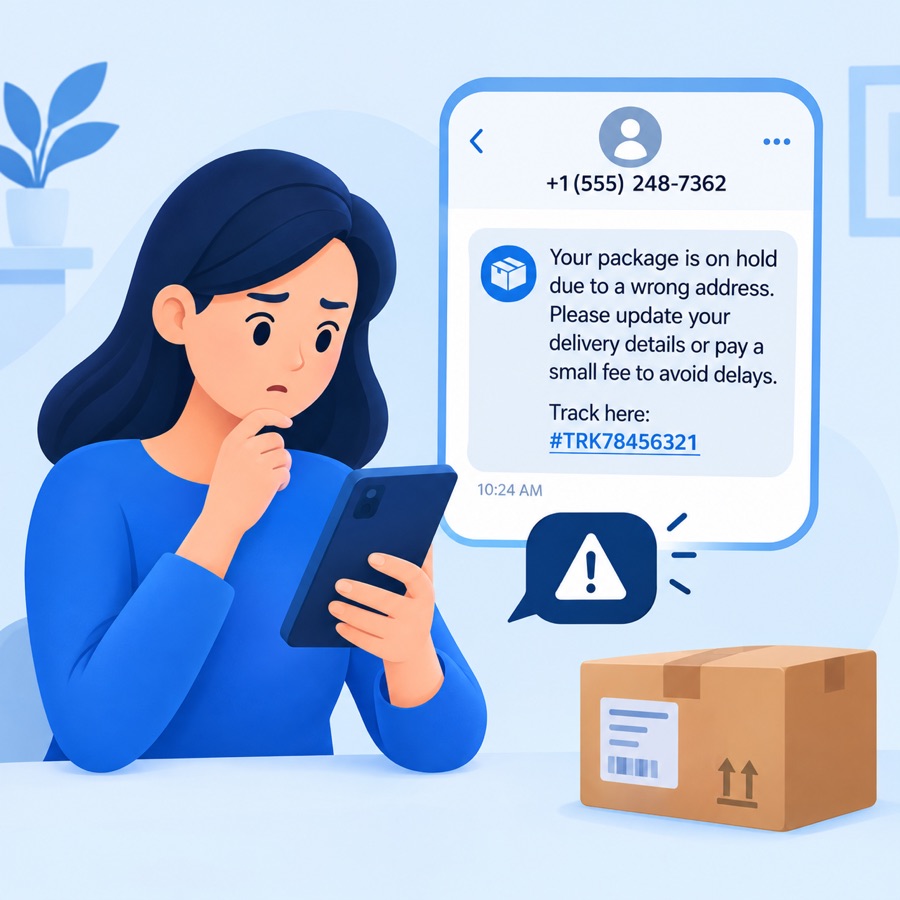
The text usually says there is a problem with a package: a wrong address, a missing signature, or an unpaid fee. It often includes a fake tracking number to make it look believable. The number sending the text is usually a regular phone number, not an official short code.
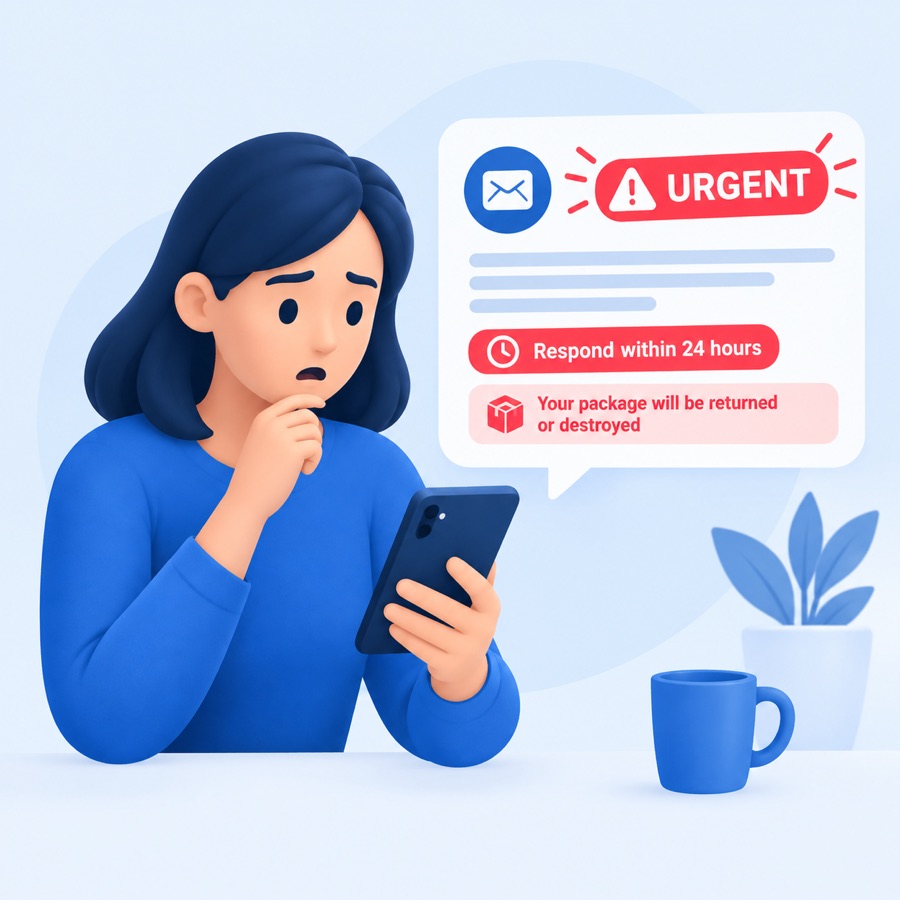
Scammers want you to act fast, before you have time to check if the message is real. This is done through:
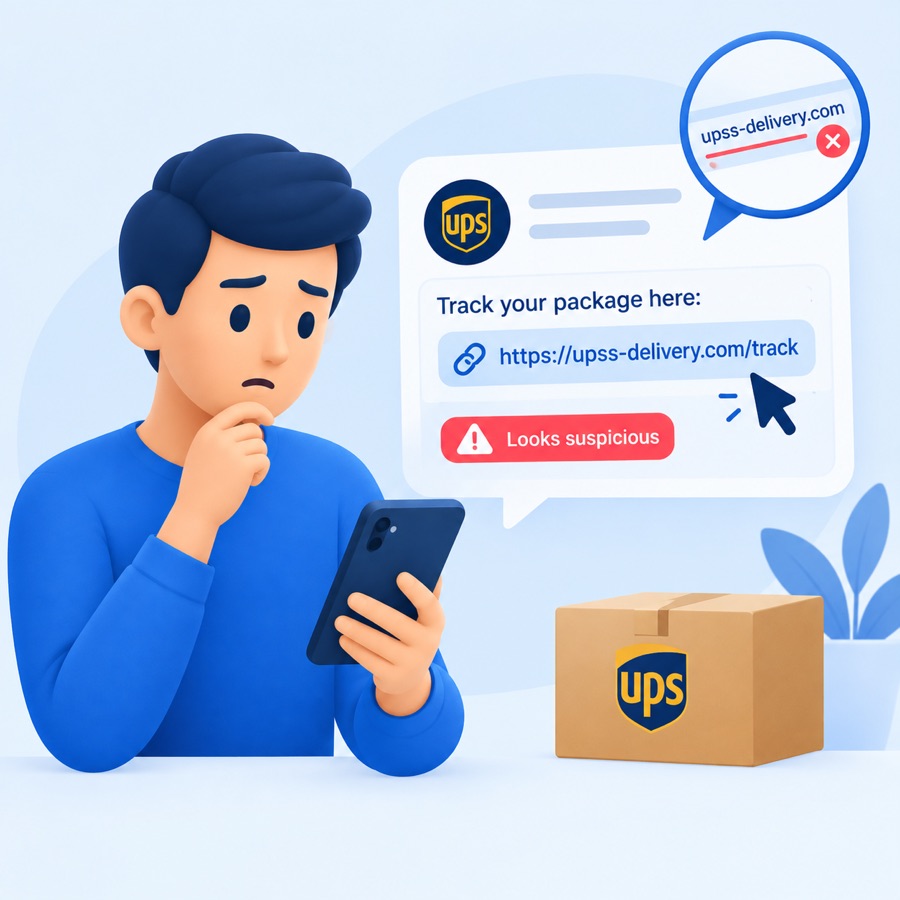
The text contains a link that looks similar to a real UPS link but isn't. It may use a misspelled domain, an unusual web address, or a shortened link that hides the actual destination.
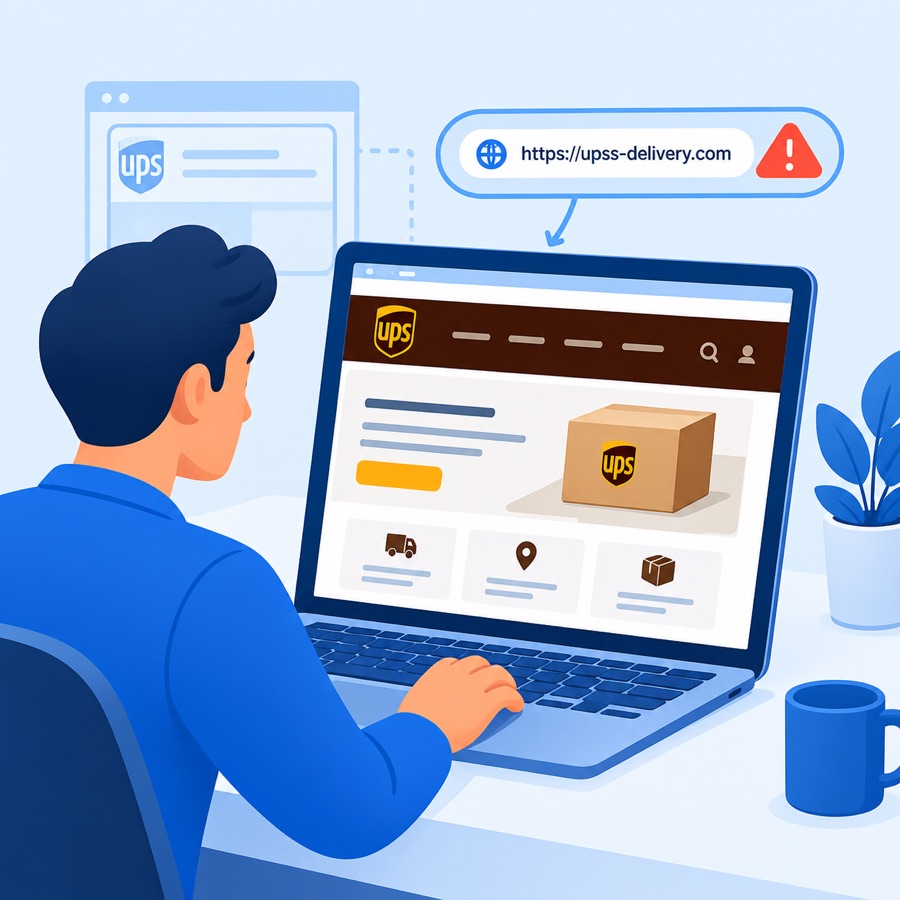
Clicking the link leads to a page designed to look like the official UPS site. It may show the UPS logo and similar colors, but it is hosted on a different, unofficial website.
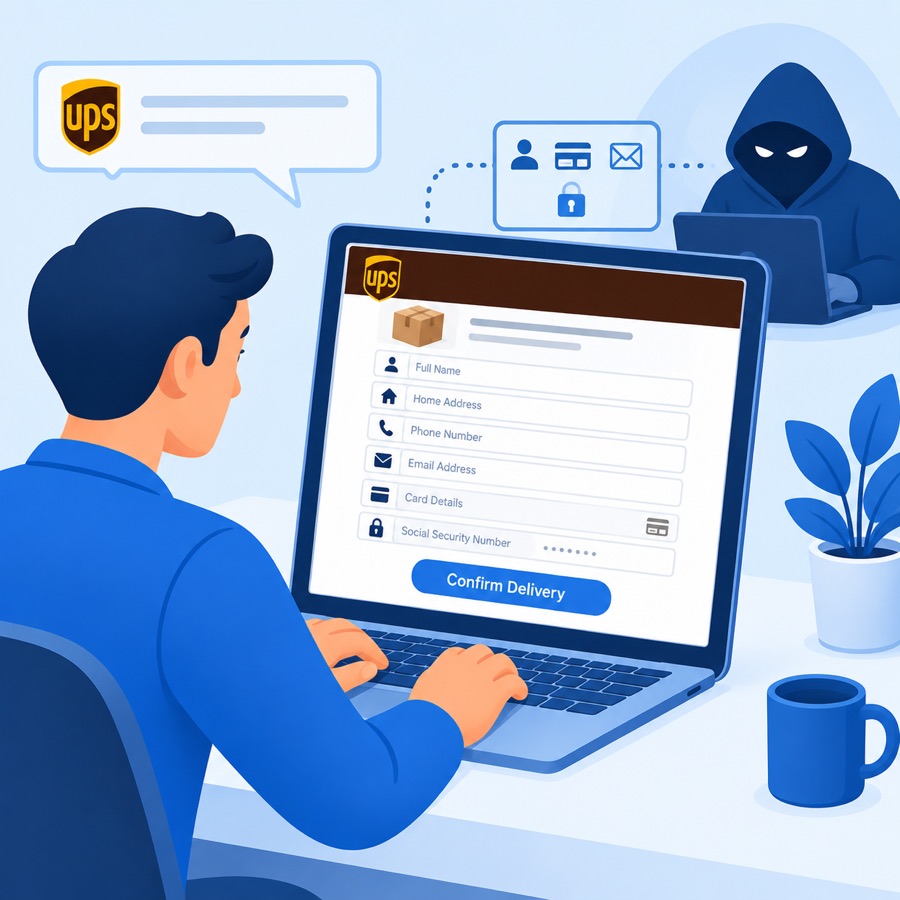
On this fake page, you are asked to enter personal details to "confirm" the delivery. This can include:
Once entered, this information goes directly to the scammer, not UPS.
Scam texts can look convincing at first, but most of them give themselves away once you know what to look for. Here are seven things worth checking before you trust any "UPS" message.
Does the text mention anything specific, such as an item, a real tracking number, or something you actually bought? Probably not. Most scam texts stay vague on purpose. "Your package" or "a delivery" is about as specific as they get, because whoever sent it has no clue what, if anything, you ordered.
Weird capitalization, phrasing that sounds slightly off, a line like "Your Package Have Been Delayed." A real delivery company just wouldn't write that.
Simple question, easy to skip. But if you haven't ordered anything lately and a delivery text shows up out of nowhere, that alone tells you something. These go out in bulk to thousands of numbers, so a lot of them land on people with nothing coming at all.
Copy it, paste it into a search bar. Takes ten seconds. If it's already been flagged as a scam number, you'll usually see that pretty fast.
Don't use the link. Go straight to ups.com and type the tracking number in yourself. No record of it there means the text was fake.
No name, or the wrong name entirely: that's a giveaway a lot of people miss. "Dear Customer" instead of your actual name is a small thing, but it usually means the message wasn't written with you in mind.
Redelivery fee, customs charge, processing cost: it doesn't matter what they call it. UPS isn't collecting money through a text link. Full stop. Any mention of a fee in the message is really the whole story right there.
The FTC has documented text messages that claim a small delivery or shipping fee needs to be paid before a package can be released, often for an amount under $5 to seem harmless. The message includes a link to a fake payment page designed to capture card information. Security company Aura reported an example of a fake delivery fee message referencing a small dollar amount tied to a package that used the recipient's real name and postal code, information likely pulled from a prior data breach.
Local police departments, including the Grand Junction Police Department in Colorado, have issued public alerts describing messages that ask recipients to click a link to confirm or update delivery instructions for a package supposedly being held. The department's alert explains that these messages may include fake delivery updates, suspicious activity alerts, or claims of delivery errors, all directing the recipient to a fraudulent website.
The FTC has also documented a variation where the text claims a delivery needs to be scheduled by clicking a link, which then leads to a fake Amazon page inviting the recipient to complete a customer satisfaction survey and claim a free prize, in exchange for entering a credit card number to cover shipping and handling.
If a delivery text seems off, the safest approach is to avoid interacting with it directly and instead verify the claim through official channels before taking any action.
| Step | Action | Why It Matters |
|---|---|---|
| 1 | Do not click any link in the message. | Links in scam texts lead to fake sites built to collect personal or card details. |
| 2 | Do not reply to the text. | Replying confirms your number is active, which can lead to more scam messages. |
| 3 | Check tracking directly on ups.com or the UPS app. | Official tracking will show your real shipment status without needing the text. |
| 4 | Look up the tracking number separately, if one is given. | A tracking number that doesn't match any real UPS record confirms it's fake. |
| 5 | Block the sender's number. | This will prevent further messages from that number, but scammers often use new ones. |
| 6 | Unsure about a text? Call Unscammed at 1-866-UNSCAMY, free, 24/7, no app needed, and get an instant scam check. | Reporting helps carriers and agencies track and block scam campaigns; we can help file reports to agencies such as the FTC on your behalf. |
Clicking the link alone does not put your information at risk if you did not enter anything on the page that opened. In that case, simply close the browser tab and delete the text. The bigger concern is if you typed in personal details, card numbers, or login information before realizing the site was fake.
If you entered payment card details, call your bank or card issuer right away and ask them to cancel the card and watch for unusual charges.
If you entered a password you use elsewhere, change that password immediately, along with any other account using the same one. If you gave out something like your Social Security number, it is worth placing a fraud alert or credit freeze with the major credit bureaus, since that kind of information can be used to open new accounts in your name.
It also helps to check your phone for anything unusual, since some fake delivery pages try to get you to download a file along with entering information. Running a security scan through your phone's built-in tools or a trusted antivirus app can catch this. None of these steps guarantee your information stays safe, but acting quickly lowers the chances of real damage.
Reporting a scam text does not undo any harm already done, but it helps phone carriers, government agencies, and UPS itself track patterns and block similar messages before they reach more people. There are several channels to use, and it is fine to report to more than one.
| Where to Report | How to Do It | What It Does |
|---|---|---|
| Your mobile carrier | Forward the text to 7726 (spells "SPAM"). | Helps the carrier identify and block similar messages network-wide. |
| Federal Trade Commission (FTC) | File a report at reportfraud.ftc.gov. | Adds the scam to the FTC's Consumer Sentinel Network, used to track scam trends and support investigations. |
| UPS directly | Forward the message to fraud@ups.com or report it through UPS's official phishing report page. | Alerts UPS so they can warn other customers and take down fake sites using their name. |
| Federal Communications Commission (FCC) | File a complaint at fcc.gov/complaints. | Tracks unwanted and fraudulent text messages at the carrier and network level. |
| Your phone's built-in reporting tool | Use the "Report Junk" option in Apple Messages or Google Messages. | Sends the message data directly to Apple or Google's spam detection systems. |
| A scam reporting service | Unscammed can help file reports to agencies such as the FTC, FBI, local police, and your bank. | Useful if you want help navigating multiple reports, though it does not replace reporting directly to your bank if money was lost. |
The safest way to confirm a delivery update is real is to check it directly through UPS's official channels instead of trusting the text message itself.
Fake UPS delivery texts work by creating urgency and copying a brand people already trust. The good news is they follow a pattern: unexpected links, pressure to act fast, requests for payment, and small errors that don't match how UPS actually communicates. Before clicking anything, check tracking directly on ups.com or the UPS app.
If you've already clicked a link or lost money, don't stay quiet about it. Reporting quickly limits the damage and helps others avoid the same scam. Unscammed makes this easier: its AI handles the paperwork and automatically files reports to agencies like the FTC and IC3 on your behalf, so you don't have to navigate multiple websites alone while trying to recover from a scam.
Yes, but only if you've signed up for UPS My Choice or opted into text alerts for a specific shipment. If you never signed up for texts, an unexpected delivery message is worth treating with caution. This is one of the most common forms of UPS scam activity.
Scammers send these messages in bulk to large numbers of people at once. They don't know who's actually expecting a delivery; they're relying on the odds that some recipients will be.
A UPS Ground text scam is a fake message claiming a package sent via UPS Ground service is delayed, held, or needs a fee to be released. It follows the same pattern as other UPS scam texts and usually includes a link to a fake website.
Simply reading the message won't infect your device. The risk comes from tapping the link inside it or downloading anything the linked page prompts you to install.
No. Unlike legitimate marketing texts, replying to a scam message confirms your number is active and being read, which can lead to more scam attempts rather than fewer.

Banks, police and agencies all ask for proof. Learn what to save from phishing emails, fake websites, calls and AI scams, and how to store it before you report.
Published: Oct 9, 2026 Fake toll balances, fraud alerts and missed deliveries all arrive by text. Learn the signs of a scam text, what to do when you get one, and where to report it.
Published: Oct 4, 2026