
What Evidence to Save After an AI Scam or Phishing Attack
Banks, police and agencies all ask for proof. Learn what to save from phishing emails, fake websites, calls and AI scams, and how to store it before you report.
Published: Oct 9, 2026Fake toll balances, fraud alerts and missed deliveries all arrive by text. Learn the signs of a scam text, what to do when you get one, and where to report it.
 Share:


"Your toll balance is overdue. Pay now to avoid a late fee." If you got a message like this, it's most likely a scam.
Scammers send texts like this to look like real toll programs, such as E-ZPass or SunPass. The message threatens late fees or a suspended vehicle registration if you don't pay right away. The link leads to a fake website that asks for your card details.
In 2025, the FTC received more than 1 million imposter scam reports, with losses of $3.5 billion. Reports of government imposter scams rose 40%, partly because of fake toll messages. Text scam losses reached $470 million in 2024, more than five times the 2020 total.
In this article, we explain the signs of text message scams, what to do if you get one, and where to report it so you can protect your money and help stop scammers.
A scam text message is an unexpected text that tries to trick you into giving away your personal or financial information. Scammers use these texts to get details such as your password, account number, or Social Security number. This is called phishing. If it has already happened to you, here's what evidence to save after a phishing attack.
The text may look like it comes from a company you know or trust, such as a bank, a credit card company, an online store, or a payment app. It usually tells a story to get you to click a link. It may say there is suspicious activity on your account, a problem with your payment, a package you missed, or a fine you must pay. The link leads to a fake website that asks for your information.
Scammers can make any name or phone number show up on your screen, so caller ID is not proof that a text is real. Legitimate companies do not ask for your account information by text.
For a scammer, a text message has three advantages: it costs little to send, it is likely to be read, and it can be made to look like it came from a real company. Here is how each one works.
Scam texts come in many forms, but most copy a message you might expect to get from a real company or agency. The types below are the ones the FTC and FBI have reported most recently.
The text says you owe a toll balance. Some copy real programs, such as E-ZPass, SunPass, FasTrak, and TxTag. The message threatens late fees or a suspended vehicle registration unless you pay right away. The link leads to a fake site that asks for your card or other financial details. The FTC says reports of government imposter scams rose 40% in 2025, partly because of these messages.
In April 2026, the FTC reported a spike in texts with a picture of what looks like an official notice of a traffic hearing. The FTC says these texts are probably scams. Don't click the link or reply. If you think you have a real violation, contact the court or agency using contact details you find yourself.
The text says it is from the fraud department at your bank or a company like Amazon and offers help with a suspicious charge. People who respond are connected to a scammer, who tells them to move their money to a "safe" account. The scammer controls that account, and the money is not returned. If you get a message like this, call your bank using the number on your card.
Between January 2025 and July 2026, the FBI's Internet Crime Complaint Center (IC3) received nearly 61,000 complaints about law enforcement and government impersonation scams. Losses were more than $1.6 billion. One version says you missed jury duty or a court date and threatens arrest unless you pay a fine. Another tells medical professionals their license is expiring or was used in a crime.
Knowing the warning signs helps you decide quickly whether a text is safe. The signs below appear in most scam texts.
| Warning Sign | Example |
|---|---|
| Unexpected message | A text from a company or person you have not dealt with, or a "wrong number" text. |
| Link request | "Click here to pay," "verify your account," or "reschedule your delivery." |
| Request for personal or financial information | A request for your password, account number, card number, or Social Security number. |
| Claim of a problem | Suspicious account activity, a payment issue, an unpaid toll, a missed delivery, or a fine. |
| Pressure to act quickly | "Pay now to avoid a late fee" or "Your account will be suspended." |
| Threat of a penalty | A fine, a suspended vehicle registration, or a missed court date. |
| Official appearance | A known company name, a logo, or an image of an official notice. |
If you get a text you did not expect, take a few simple steps before you act. These steps keep your money and personal information safe and help stop the scam from spreading.
Replying to an unexpected text can lead to a scam. Even a short answer confirms that your number is active.
The link may lead to a fake website that asks for your card details or personal information. Scammers want you to react quickly, so stop and check first.
The phone number in the message may connect you to the scammer. Do not use it.
Do not assume a text from a known company or agency is real. Contact your bank, toll program, or delivery service using a phone number or website you already know is real, such as the number on the back of your card.
Legitimate companies do not ask for your account information by text. Never send a password, card number, or Social Security number in reply.
Then delete the message and block the number.
If you are not sure a text is a scam, we can help. At Unscammed, we help people report scams, including reports to the FBI and FTC. You can also call us toll-free at 1-866-UNSCAMY (1-866-867-2269) to check a suspicious call, text, or email. If you have already lost money, we guide you through the reporting steps.
Reporting a scam text helps stop it from reaching others. You can report to your phone provider, the FTC, and the FBI. It takes a few minutes and costs nothing.
| Where to Report | How to Report |
|---|---|
| Your phone (Messages app) | Use the "report junk" option on an iPhone or the "report spam" option on an Android phone. |
| 7726 (SPAM) | Copy the text and forward it to 7726. |
| FTC: ReportFraud.ftc.gov | Choose the category that fits your text, or choose "Something Else." Paste the message into the Comments field. Do not click any links in the text. |
| FTC by phone | Call 1-877-FTC-HELP (1-877-382-4357). |
| FBI: ic3.gov | File a complaint with the FBI's Internet Crime Complaint Center. Include the text, the sender's number, and any payment details. |
| Your bank or card company | Call the number on the back of your card. |
| Unscammed | We help you report scams to the FBI and FTC and guide you through the steps for contacting your bank. Get help with reporting in under 10 minutes, for free. |
Scam texts are a growing problem. In 2024, people reported $470 million in losses to text scams, more than five times the 2020 amount. These texts share the same warning signs: an unexpected message, a link, a request for personal information, and pressure to act fast.
If you get one, do not click the link, reply, or call the number in the message. Contact the company or agency using a phone number or website you know is real. Then delete the text and report it to 7726 (SPAM) and ReportFraud.ftc.gov. If you lost money or shared personal information, also file a complaint at ic3.gov and call your bank.
Got a scam text? At Unscammed, we help people report scams, including reports to the FBI and FTC. If you are not sure whether a text is a scam, or you do not know where to start after losing money, we can guide you through each step. Start your report or call us toll-free at 1-866-UNSCAMY (1-866-867-2269) to check a suspicious call, text, or email.
Check whether you expected the message. Scam texts usually contain a link, claim there is a problem, and tell you to act fast. Don't click the link or call the number in the text. Contact the company using a phone number or website you know is real. The FTC says not to assume a text from a known company is real.
It may be. The FTC reports that scammers send fake delivery texts with a link to fix a problem. The link opens a fake website that asks you to pay a "re-delivery fee" and enter your card details. Don't click it. Go to the carrier's official website or app and enter your tracking number yourself. If you were not expecting a package, ignore the text.
Possibly. In May 2026, the FTC warned about fake invitations sent by text and email that look like they come from Evite or Paperless Post. Some list a person you know as the host. Real invitation sites do not need your email password or a special code to show you an invitation. Contact the host directly before you click. If you entered a password, change it right away.
Do not click the link or reply. Open the Cash App yourself and check your account for any notice. Cash App says it never asks for your PIN or sign-in code by text. The FTC warns that sending money through a payment app is like sending cash, and it is hard to get back. If you sent money, contact Cash App support and report it at ReportFraud.ftc.gov.
The FTC says the most reported text scam looks like a fraud alert from your bank. The message may ask you to call a number or reply with a code. Do not do either. Call the number on the back of your card or use your bank's official app. Never move money to a "safe" account because a text told you to. The FTC says money moved this way is not returned.
No. The FTC advises not to reply to unexpected texts, because a reply can lead to more scam messages. Instead, use your phone's "report junk" option or forward the text to 7726 (SPAM). Then block the number and delete the message. You can also report the text at ReportFraud.ftc.gov.

Banks, police and agencies all ask for proof. Learn what to save from phishing emails, fake websites, calls and AI scams, and how to store it before you report.
Published: Oct 9, 2026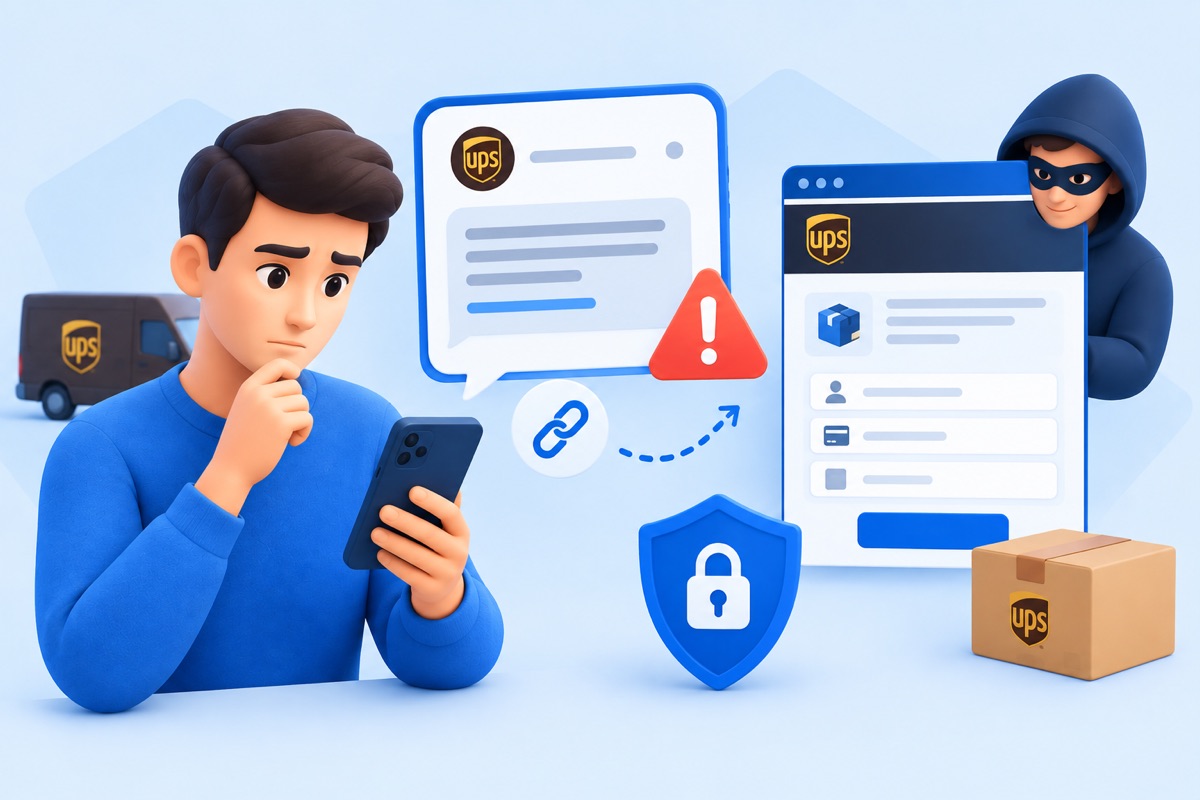
Fake UPS texts about wrong addresses and small fees lead to pages that steal your card details. Learn how the scam works, 7 ways to spot it, and where to report it.
Published: Sep 29, 2026