
What Evidence to Save After an AI Scam or Phishing Attack
Banks, police and agencies all ask for proof. Learn what to save from phishing emails, fake websites, calls and AI scams, and how to store it before you report.
Published: Oct 9, 2026Calls "from Medicare" about new cards, free braces or lapsing coverage can sound real. Learn the warning signs, how to stop these calls, and what to do if you shared your number.
 Share:


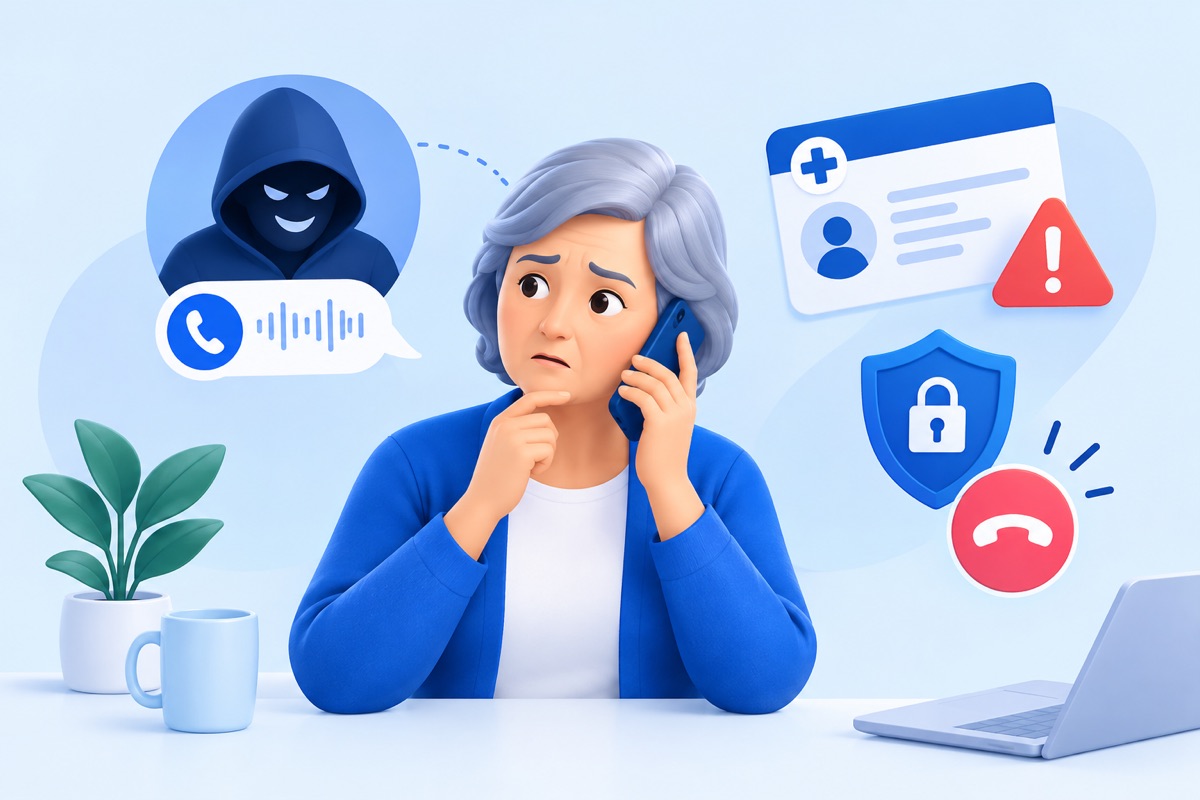
Medicare scam calls can sound genuine, but knowing the warning signs can help you protect yourself and your family.
Not sure whether a Medicare call is genuine? Check a suspicious call with Unscammed and get guidance on what to do next.
Across the US, more families than ever are picking up the phone to a call "from Medicare." A new card to activate. A free brace on offer. Coverage about to lapse. These calls can sound completely legitimate, which is exactly what makes them dangerous. The moment a scammer gets hold of a Medicare number or other personal details, the damage can be real and lasting.
In April 2026, a former California teacher pleaded guilty in a $51 million Medicare fraud scheme built on stolen beneficiary info and braces nobody ever ordered. The FTC says scammers fake caller ID on purpose, so it looks like a call from a government agency you'd trust. Medicare also says it will never call you to sell you anything or visit your home.
So let's break down how these calls actually work, and how to shut them down for good.
A Medicare scam call can sound surprisingly legitimate. The caller may know your name, mention your Medicare benefits, or even make the number on your screen look like it belongs to Medicare. But there are some clear warning signs to watch for.
One of the biggest red flags is an unexpected caller asking for your Medicare Number or other personal information.
Be especially cautious if the caller:
Medicare usually doesn't call you unexpectedly. Here's when you might receive a legitimate call from them.
| Situation | Does Medicare call you? |
|---|---|
| You called Medicare and asked for a callback. | Yes, an agent may call you back. |
| You joined a Medicare health or drug plan and a rep is following up with you. | Yes, a limited, expected follow-up. |
| You reported fraud and Medicare needs more details. | Yes, a limited, expected follow-up. |
| You left a message for Medicare. | Yes, a callback is normal. |
While the specifics may change, most Medicare phone scams fall into a few familiar patterns. Recognizing the shape of the scam is your best defense.
A caller claims Medicare is issuing new cards with a microchip and needs you to verify your Medicare Number to "activate" yours. The truth is, Medicare sends new cards automatically and for free by mail; there is no such chip card, and no activation is required over the phone.
The caller offers a "free" back brace, knee brace, or genetic testing kit, claiming Medicare will cover the cost. All they need is your Medicare Number to "ship" the item. This is a classic setup for billing fraud, where they charge Medicare for expensive equipment or tests you never receive or need.
You receive a call from a "Medicare representative" who creates a sense of panic. They might claim your coverage is about to be canceled, you owe a past-due balance, or that you're eligible for a refund. The goal is always the same: to get your personal information or a payment, often in the form of a gift card or wire transfer, which government agencies never request.
During the Annual Enrollment Period (October 15 to December 7), scammers may call with "limited-time deals" or high-pressure sales pitches for Medicare Advantage plans. They might claim you must sign up immediately or risk losing your benefits. Legitimate insurance agents can only contact you if you have previously requested information.
Want to learn more? Read our guide on Medicare scam calls and the warning signs caregivers and families should watch for, and our breakdown of Medicare benefit card scams, grocery cards and flex cards.
Stopping Medicare scam calls requires combining prevention, call-blocking tools, and knowing what to do when one gets through. A few simple habits and tools can dramatically reduce these calls.
Here are the essential steps to stop Medicare scam calls, organized from preventive measures to what to do if a call gets through.
The most effective way to stop scam calls is to prevent them from ringing in the first place.
Go to Settings > Apps > Phone and toggle on Spam Filtering. You can also enable Silence Unknown Callers, which sends calls from numbers not in your contacts straight to voicemail.
Open the Phone app, tap the three dots menu, go to Settings, select Caller ID & Spam, and turn on spam protection. On Pixel phones, Call Screen can answer unknown calls and screen them before the phone rings.
Most major phone providers offer free spam-blocking apps. AT&T has ActiveArmor, Verizon offers Call Filter, and Spectrum provides Call Guard. These apps work at the network level to block many robocalls before they reach you.
| App / Tool | Platform | Key Features | Best For | Cost |
|---|---|---|---|---|
| AT&T ActiveArmor | iOS, Android | Blocks spam and scam calls at carrier level; free version available. | AT&T customers wanting network-level protection. | Free (premium upgrade available) |
| Verizon Call Filter | iOS, Android | Screens and blocks unwanted calls. | Verizon customers wanting basic spam filtering. | Free (premium upgrade available) |
| T-Mobile Scam Shield | iOS, Android | Blocks scam calls and robocalls; dial #662# to activate. | T-Mobile customers. | Free |
| Nomorobo | iOS, Android, VoIP, Landline | Intercepts robocalls; blocks spam after one ring. Recognized by FCC. | Landline users; basic robocall filtering. | Free for landlines; $2.99/month for mobile |
Ask your carrier about free network-level call blocking. For stronger protection, consider an allow-list call blocker device that only lets approved numbers ring through.
Important: If you set your blocking preferences too strict, you might miss legitimate calls from unknown numbers like a doctor's office. Check your voicemail regularly so you don't miss important messages.
When a suspicious call comes in, you have one job: do not engage and hang up immediately. Scammers depend on keeping you on the line. The moment you hang up, you break their control.
Then, verify the call by calling the official Medicare number yourself: 1-800-MEDICARE (1-800-633-4227). Do not call back any number the caller gave you or the number that appeared on your caller ID. Scammers can fake caller ID information to make it look like they are calling from Medicare or a trusted source.
If you want to check a plan or coverage options, use the official website at Medicare.gov or contact your local State Health Insurance Assistance Program (SHIP) for free, unbiased counselling.
Never share your Medicare number, Social Security number, or bank details with anyone who calls you unexpectedly. Medicare representatives will only ask for this information in limited situations, such as when you have called them first or reported fraud.
Also remember:
If you give out your Medicare number or personal information to a scam caller, act quickly. Here's a step-by-step guide to protect yourself and report the fraud.
| Step | What to Do | Why It Matters |
|---|---|---|
| Call 1-800-MEDICARE | Call 1-800-633-4227 right away and report that your Medicare number was shared. | Early reporting helps Medicare flag your account and monitor for suspicious activity. |
| Review your statements | Check your Medicare Summary Notices (MSNs) or plan claims for charges you don't recognize. | Fraudulent claims show up here first. Catching them early limits the damage. |
| Rule out a billing error | If you see a charge you don't recognize, call the provider first. It might be a mistake they can fix. | Sometimes it's an honest error, not fraud. Getting it corrected quickly saves time. |
| Contact your local SMP | Reach out to the Senior Medicare Patrol (SMP) at 1-877-808-2468 or visit smpresource.org. | SMPs are trained to help beneficiaries spot and report fraud. They can guide you through the process. |
| Report fraud to authorities | File reports with the HHS OIG Hotline and the FTC. | Your report helps agencies track patterns and build cases against scammers. |
| Protect against identity theft | If you shared other personal info (like your Social Security number), visit IdentityTheft.gov for a recovery plan. | Medical identity theft can mix fake records with yours, affecting your care and insurance coverage. |
| Keep monitoring | Check your Medicare statements regularly and watch for new suspicious charges. | Scammers often try again. Ongoing monitoring keeps you protected. |
| Report it through Unscammed | If you've been scammed, report it through Unscammed. We help you organize your scam details and take the next steps. | Contact Unscammed at 1-866-UNSCAMY for help checking a suspicious call and knowing what to do next. |
Reporting a Medicare scam can feel confusing, especially when you're unsure where to start. Unscammed helps you organise the details, understand your reporting options, and take the next step with confidence. If you're unsure where to report, you can start with Unscammed. Call 1-866-UNSCAMY now. Unscamy listens, checks, and protects you in real time, with no app needed.
| Where the Scam Is Reported | How Unscammed Can Support You |
|---|---|
| FTC | Helps you pull together your scam details so nothing is missing when you file. |
| FBI / IC3 | Guides you in collecting evidence like emails, phone numbers, payment info, and screenshots. |
| Bank or Card Provider | Helps you clearly write down the payment details so your bank knows what to look into. |
| Medicare / HHS-OIG | Gets your facts in order so you're ready to call 1-800-MEDICARE or the OIG Hotline. |
| Local Police | Helps you put together a clear, simple summary of what happened for a police report. |
Already shared your Medicare number? Don't panic. Unscammed guides you step by step on what to do next and where to report. Start your free report.
The new Medicare card scam is when someone calls, texts, or even shows up at your door claiming you need to pay for, activate, or verify a new Medicare card. They might say your old card has expired or that Medicare is issuing cards with new security chips. The truth is, Medicare sends new cards automatically and for free by mail. No one from Medicare will call you to ask for your number or charge you for a replacement card.
Yes, the grocery or spending card offers are almost always a scam. Scammers run ads on Facebook and other platforms promising thousands of dollars in "free" groceries, rent money, or cash benefits through Medicare. These ads use fake celebrity endorsements and impersonate government programs to look real. When you click or call, they collect your personal information or steer you into worse Medicare plans that leave you paying more. Medicare does not offer grocery spending cards this way.
Scammers target seniors because they have something valuable: a Medicare number that can be used for medical identity theft and false billing. Once a scammer gets that number, they can bill Medicare for expensive equipment, tests, or services you never received. The fraud adds up fast. Medicare loses an estimated $60 billion a year to fraud, errors, and abuse. Scammers also know seniors may be less familiar with technology or more trusting, making them easier targets.
Yes, and it's often worse than financial identity theft. When a scammer uses your Medicare number to bill for services, those fake claims become part of your permanent medical record. You could end up with a "phantom diagnosis" or treatment history that doesn't belong to you. This can block you from getting real care, cause your insurance to deny coverage, or send debt collectors after you for bills you don't owe. The damage sticks around and doesn't just go away.
Act quickly. Call 1-800-MEDICARE and report that your number was shared. Review your Medicare Summary Notices for charges or services you didn't receive. Contact your local Senior Medicare Patrol at 1-877-808-2468 for free help. Report to the FTC at IdentityTheft.gov if other personal info was shared. Keep watching your statements, because if scammers used your number once, they often try again.
Almost never. Medicare will not call you uninvited to ask for your number, sell you anything, or threaten to cancel your coverage. They also won't show up at your door without a prior appointment you requested. Official Medicare communication comes by mail, not by phone. If someone calls claiming to be Medicare, the safest move is to hang up and call 1-800-MEDICARE yourself to verify. Don't trust the number on your caller ID, because scammers fake that too.

Banks, police and agencies all ask for proof. Learn what to save from phishing emails, fake websites, calls and AI scams, and how to store it before you report.
Published: Oct 9, 2026 Fake toll balances, fraud alerts and missed deliveries all arrive by text. Learn the signs of a scam text, what to do when you get one, and where to report it.
Published: Oct 4, 2026